


Hair Transplant Healing Timeline: Day-by-Day Recovery Guide
Understanding the hair transplant healing timeline is the single best way to set realistic expectations, avoid unnecessary panic, and protect your results during the most fragile weeks after surgery. Recovery…
 September 1, 2026
7 min read
September 1, 2026
7 min read
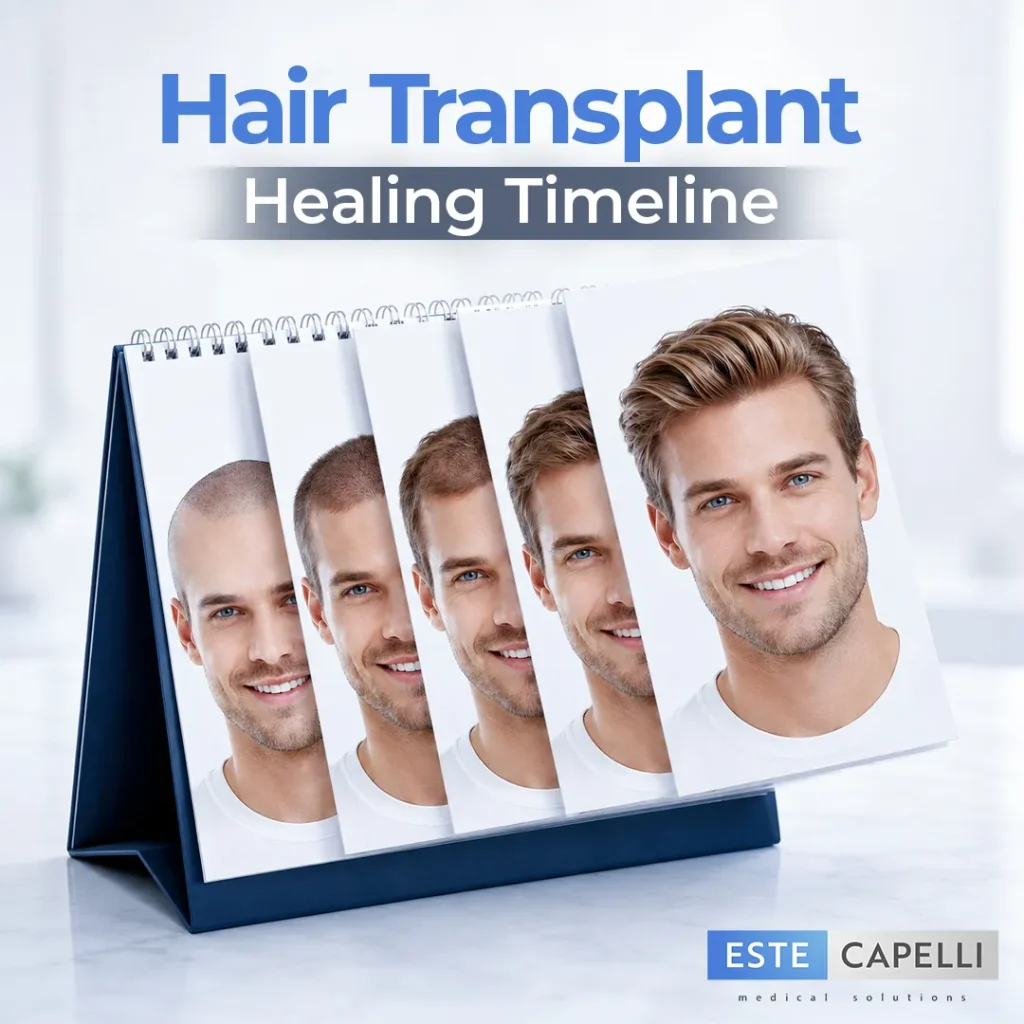
Understanding the hair transplant healing timeline is the single best way to set realistic expectations, avoid unnecessary panic, and protect your results during the most fragile weeks after surgery. Recovery isn’t a straight line — it moves through predictable stages, from the first scabs and redness to the frustrating “ugly duckling” shedding phase, and finally to visible regrowth. This guide walks you through the entire recovery process day by day, week by week, and month by month, so you always know what’s normal and when to reach out to your clinic.
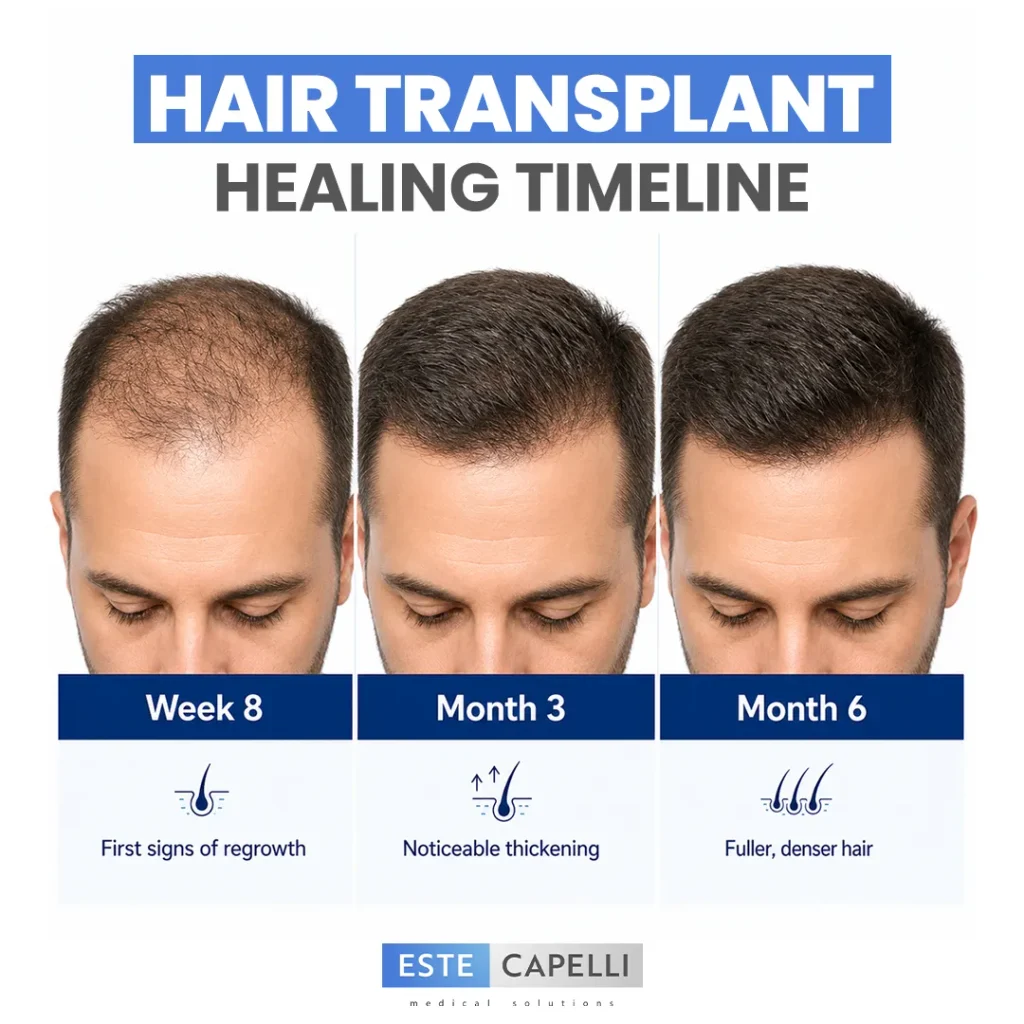
At Estecapelli in Istanbul, our surgical team has guided thousands of international patients through recovery. The pattern below reflects what most people experience after a modern FUE or DHI procedure, though your exact timeline can shift by a few days depending on your healing speed, graft count, and aftercare discipline.
Why the Hair Transplant Healing Timeline Matters
The transplanted grafts are essentially micro-wounds holding newly relocated follicles. In the first 10–14 days, those follicles anchor into their new blood supply. What you do — and don’t do — during this window has a direct effect on graft survival and final density.
Knowing the healing timeline helps you in three concrete ways: you can plan time off work and travel, you won’t be alarmed when your new hair falls out (this is expected), and you’ll recognise the rare warning signs that genuinely need attention. Recovery is largely about patience and protecting the area, not about doing anything complicated.
The Hair Transplant Healing Timeline: The First 7 Days
The first week is the most delicate part of the entire recovery process. This is when grafts are least secure and aftercare matters most.
Days 1–2: Immediately After Surgery
Expect mild swelling, redness, and tiny scabs forming around each graft in the recipient area. The donor area (usually the back of the head) may feel tight or numb. Most clinics apply a bandage to the donor zone for the first day. You’ll sleep semi-upright, at roughly a 45-degree angle, to limit swelling. Some light oozing or pinpoint bleeding is normal.
Days 3–5: Swelling Peaks
Forehead swelling often peaks around day 3 or 4 and can drift down toward the eyes — this looks dramatic but is harmless and settles quickly. Your first gentle wash typically begins in this window, following your clinic’s exact instructions. Scabs are now well formed. Do not pick, scratch, or rub them.
Days 6–7: Settling In
Swelling usually subsides by the end of week one. Scabs begin softening with each careful wash. Many patients feel comfortable enough to be seen in public, especially if the transplanted area can be loosely covered. This is often when international patients fly home.
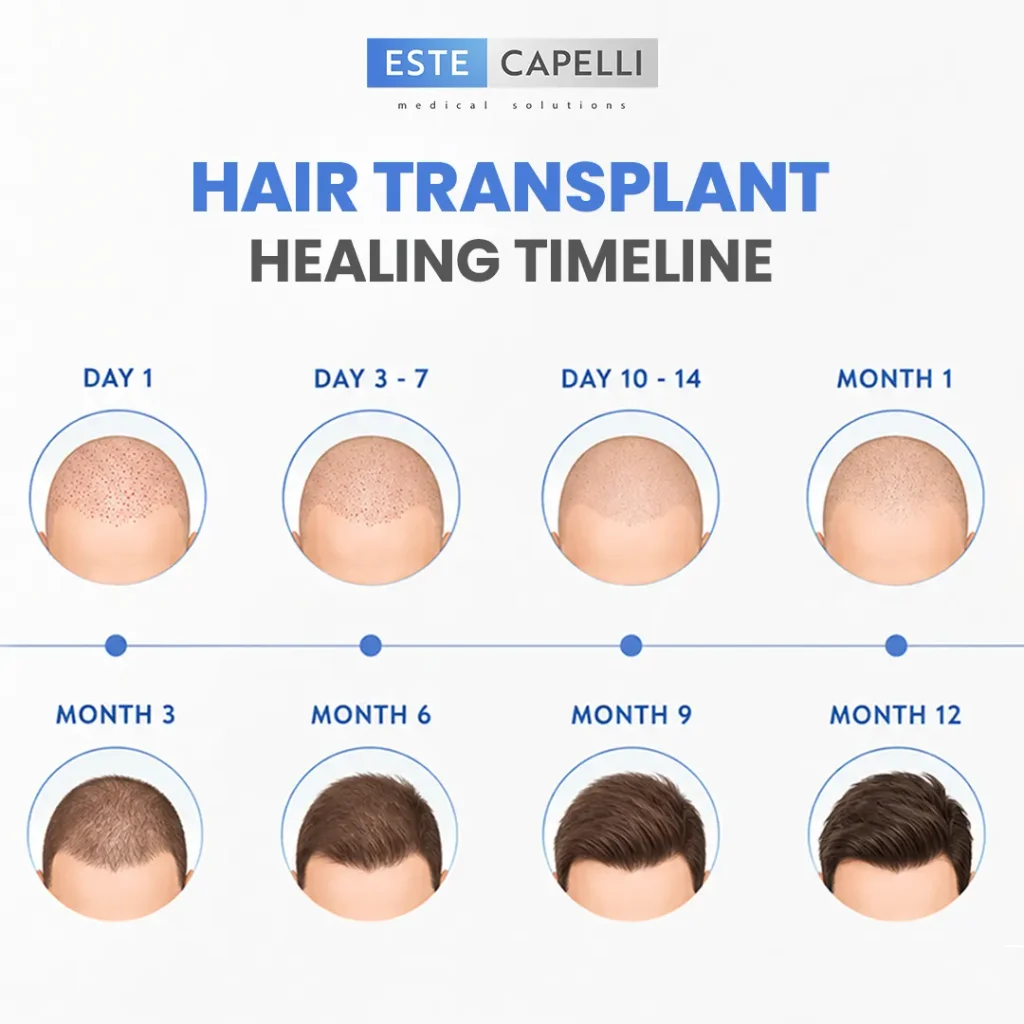
Weeks 2 to 4 of the Healing Timeline
The second phase of the hair transplant healing timeline is about the skin fully closing and the scabs clearing completely.
By days 10–14, following the washing routine correctly, nearly all scabs should have fallen away naturally. The recipient area may still show pink or light redness, which fades gradually — faster in lighter skin, slower in others. The donor area continues to recover and any numbness slowly resolves over the following weeks.
Around weeks 2–4, most people can return to light exercise, though heavy lifting, intense cardio, saunas, and swimming should still wait. This is also when the transplanted hairs are firmly rooted enough that accidental contact is far less risky than in week one.
The Shedding Phase: Weeks 3 to 8
This is the stage that surprises patients most, so it deserves special attention in any honest recovery guide. Between roughly week 3 and week 8, the transplanted hairs shed. This is called shock loss or the “ugly duckling” phase, and it is completely normal and expected.
The follicle stays alive and healthy beneath the skin — only the visible hair shaft is released before the follicle enters a new growth cycle. Many patients feel disheartened here, thinking the procedure failed. It did not. Shedding is a sign the follicles are transitioning into their resting phase before regrowth begins.
Some patients also experience temporary thinning of their existing native hair around the transplanted zone. This too usually recovers over the following months.
Months 3 to 6: New Growth Begins
From around month 3, the healing timeline turns encouraging. New hairs start pushing through, often fine, thin, and slightly wispy at first. Growth is uneven across the scalp — some areas sprout earlier than others, which is normal.
By months 4–6, coverage becomes visibly noticeable. The new hairs thicken and darken gradually. Most patients see somewhere around a meaningful share of their final result emerging in this window, though texture and density are still maturing.
Months 6 to 12+: Maturation and Final Results
The last stage of the hair transplant healing timeline is the longest but also the most rewarding. Between months 6 and 12, hairs continue to thicken, gain pigment, and blend with your existing hair.
Final results typically settle at around 12 months for most patients, and up to 15–18 months for the crown area, which is always the slowest zone to mature. By this point the transplanted hair behaves like normal hair — you can cut, style, and wash it freely.
What Can Slow Down Your Recovery
Most people move through the stages above on schedule, but a few factors can delay healing or put grafts at risk. Being aware of them helps you protect your investment.
Smoking is the biggest controllable factor — nicotine narrows blood vessels and reduces oxygen flow to the newly placed follicles, which are entirely dependent on fresh blood supply in the first days. Alcohol thins the blood and can worsen swelling and bleeding early on. Poorly managed conditions such as uncontrolled diabetes can also slow tissue repair, which is why an honest medical history before surgery matters.
Physical factors play a role too. Aggressive washing, scratching, wearing tight hats too soon, sleeping flat, or returning to heavy exercise before the grafts are secure can all disrupt healing. Sun exposure on the sensitive recipient area in the first weeks can prolong redness and irritate the skin. None of these are complicated to avoid — they simply require discipline during the early window.
How Individual Results Can Vary
Two patients who had the same procedure on the same day can still recover at slightly different speeds. Skin type, age, graft count, the density of the transplanted area, and general health all influence how quickly redness fades and how early new hairs appear. A larger session covering a bald crown may take longer to show full coverage than a smaller hairline restoration.
This is why the timeline in this guide describes the typical pattern rather than a guarantee. If your progress is a week or two behind what you read here, that alone is rarely a cause for concern. What matters more is the overall trajectory: scabs clearing, redness fading, shedding passing, and new growth arriving by around month three to four.
Aftercare Tips to Support Your Healing Timeline
- Sleep elevated for the first week to reduce swelling.
- Follow the washing routine exactly as instructed by your clinic — gentle, never aggressive.
- Avoid direct sun on the recipient area for the first few weeks.
- No smoking or alcohol in the early days, as both impair healing and blood flow to grafts.
- Skip the gym, sauna, and swimming until your surgeon clears you.
- Don’t scratch or pick scabs — let them fall away naturally.
- Be patient through shedding — it is part of the process, not a failure.
If you’d like a recovery plan tailored to your procedure and graft count, our team is happy to walk you through it. Chat with our patient team on WhatsApp for a free consultation.
Frequently Asked Questions About the Hair Transplant Healing Timeline
How long does it take to fully heal after a hair transplant?
The skin surface heals within about 10–14 days as scabs clear and redness fades. However, the full healing timeline — meaning final hair growth — takes around 12 months, and up to 15–18 months for the crown.
When do transplanted hairs fall out during recovery?
Transplanted hairs typically shed between weeks 3 and 8. This shedding phase is normal and expected; the follicle remains alive and regrows new hair over the following months.
When will I see new hair growth after a hair transplant?
New growth usually begins around month 3. Noticeable coverage appears by months 4–6, with hairs continuing to thicken and mature through months 6–12.
How long is the redness part of the healing timeline?
Mild redness or pinkness in the recipient area is normal for the first few weeks after scabs clear. It fades faster in lighter skin and can take a little longer in others, but generally resolves within the first month or two.
When can I return to work and exercise during recovery?
Many patients return to desk work within 3–7 days. Light exercise is usually fine after 2–4 weeks, while intense workouts, saunas, and swimming should wait until your surgeon clears you.
Recovery takes patience, but knowing exactly what each stage of the hair transplant healing timeline looks like makes the wait far easier. If you have questions about your own recovery or want to plan a procedure, reach out to the Estecapelli team on WhatsApp — we’re happy to help you every step of the way.
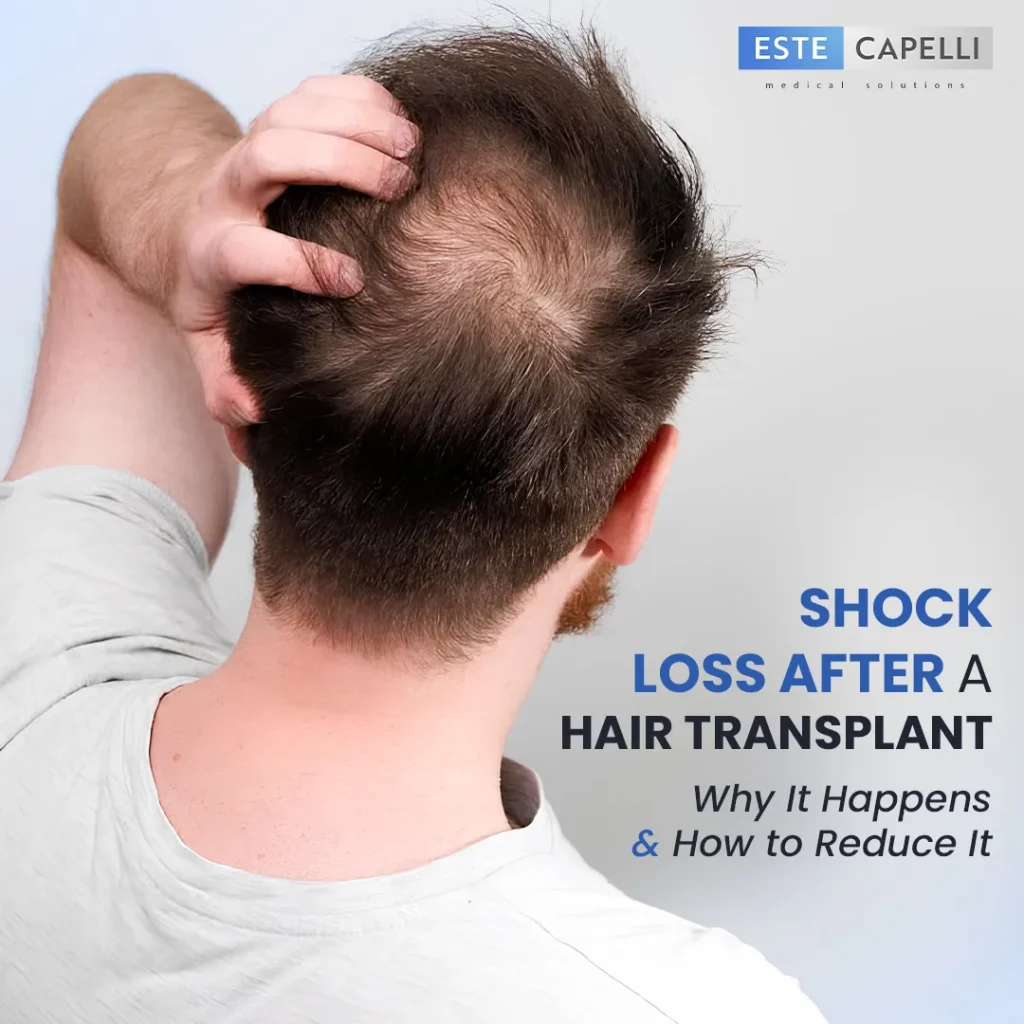
Shock Loss After a Hair Transplant: Why It Happens & How to Reduce It
Quick answer: Shock loss after a hair transplant is temporary shedding that usually starts 2 to 8 weeks after surgery. Transplanted hairs fall out…
Read more
Hair Transplant Complications & Failure Rates: What’s Actually Normal
Quick answer: Serious hair transplant complications are uncommon. Large clinical series put the overall complication rate at about 1.2% to 4.7%, and most events…
Read more
How Are Hair Transplant Grafts Counted? Grafts vs Density Explained
Quick answer: A hair transplant graft is one follicular unit, a natural cluster of 1 to 4 hairs, so the hair transplant graft count…
Read more