


Hair Transplant Complications & Failure Rates: What’s Actually Normal
Quick answer: Serious hair transplant complications are uncommon. Large clinical series put the overall complication rate at about 1.2% to 4.7%, and most events are mild and temporary. Swelling (40…
 October 7, 2026
11 min read
October 7, 2026
11 min read
Quick answer: Serious hair transplant complications are uncommon. Large clinical series put the overall complication rate at about 1.2% to 4.7%, and most events are mild and temporary. Swelling (40 to 50% of patients), folliculitis (about 12%) and temporary shedding are normal parts of recovery. Infection stays below 1%, and true graft failure is rare when a qualified surgeon leads the procedure.
Hair transplant complications are one of the first things patients research, and also one of the most confusing. Some clinics say “zero risk”, while forums are full of worst-case photos. Neither picture is accurate. This guide uses peer-reviewed data to show what the real rates are, which reactions are normal healing, which ones need a doctor, and what actually causes a transplant to fail.
This article is general medical information, not personal medical advice. Your surgeon should assess your individual risk before any procedure.
Hair Transplant Complications at a Glance: Key Facts
| Question | Evidence-based answer |
|---|---|
| Overall complication rate | About 1.2% to 4.7% in large clinical series |
| Most common reaction | Forehead swelling in 40 to 50% of patients, gone in 5 to 7 days |
| Infection rate | Below 1% in most studies |
| Folliculitis (pimple-like bumps) | About 12%, usually mild and treatable |
| Shock loss of native hair | 0.15% to 15%, regrowth usually starts around month 3 |
| Unexplained poor growth | About 0.5% to 1% even with good technique |
| Final result visible | 12 months, so “failure” cannot be judged early |
How Common Are Hair Transplant Complications?
Hair transplant complications occur in roughly 1 to 5 out of every 100 procedures, according to large surgical series. A 2026 review of follicular unit excision (FUE) in Frontiers in Medicine reports overall complication rates between 1.2% and 4.7%, with major adverse events being uncommon.
One of the largest single-centre series, covering 533 hair transplant procedures, recorded a 4.7% total complication rate. The breakdown was small: enlarged scar 1.2%, folliculitis 1.0%, donor-area necrosis 0.8%, keloids 0.4%, and infection 0.2%. Most of that series used the older strip (FUT) technique, which leaves more donor wounds than modern FUE.
Reported rates of hair transplant complications differ between studies because they define “complication” differently. A study that counts every case of swelling will report a much higher rate than one that only counts events needing treatment. In a series of 1,030 FUE procedures, notable events were recorded in 9.9% of cases, but nearly half were mild swelling or itching. That is why patients should always ask what a quoted rate actually includes.
What Is Normal After a Hair Transplant and What Is Not?
Normal reactions after a hair transplant are swelling, redness, scabbing, itching, mild soreness and temporary shedding, all of which settle on a predictable timeline. A reaction becomes a warning sign when it appears outside that timeline, gets worse instead of better, or comes with pus, fever, spreading redness or dark patches of skin.
The table below lists the 9 most discussed hair transplant complications and risks, how often each one happens, and the point where you should contact your surgeon. For the full day-by-day recovery picture, see our hair transplant healing timeline.
| Risk | How often | What is normal | Contact your surgeon if |
|---|---|---|---|
| Swelling (edema) | 40 to 50% | Forehead swelling peaking day 2 to 3, gone by day 7 | It spreads, is painful, or lasts beyond 10 days |
| Scabs and crusting | Almost everyone | Small crusts that fall off by day 7 to 10 | Thick, dark crusts remain after 14 days |
| Itching | Common | Days 3 to 7, fading over a few weeks | Intense itching with rash or pustules |
| Folliculitis | About 12% | A few small bumps in weeks 1 to 4 or around week 10 | Many painful, spreading or pus-filled bumps |
| Shock loss | 0.15 to 15% | Native hair shedding at weeks 2 to 8 | No regrowth signs after month 4 to 6 |
| Numbness | About 2% long term | Reduced sensation for weeks to months | Burning pain or numbness past 8 months |
| Infection | Below 1% | Not expected | Pus, fever, warmth, swollen lymph nodes |
| Recipient-site necrosis | Rare | Not expected | Grey, purple or black skin patches in the first days |
| Donor overharvesting | Variable, technique-related | Even, invisible donor area once hair grows | Patchy or “moth-eaten” thinning at the back |
Soreness is also expected for the first 2 to 3 days and is usually controlled with simple painkillers. Our separate guide answers how painful a hair transplant really is.
What Are the Most Common Side Effects in the First Month?
The most common hair transplant side effects in the first month are swelling, crusting, itching and folliculitis. They are reactions of healing skin rather than true hair transplant complications, and almost all resolve without affecting the final result.
Swelling comes from the anaesthetic fluid moving down toward the forehead and eyes. Periorbital swelling (around the eyes) affects about 3 to 5% of FUE patients. In one prospective study, adding a corticosteroid to the anaesthetic solution cut post-operative swelling from 40% to 9% of cases, which is why surgical protocol matters.
Folliculitis looks like small pimples around grafts. A large multicentre study found it in 12.1% of FUE patients. Risk rises with sessions above 4,000 grafts, implantation density above 45 grafts per cm², washing delayed beyond 3 days, and surgery in summer. A later wave around week 10 is often just new hairs pushing through the skin.
What Are the Serious Hair Transplant Complications?
Serious hair transplant complications are infection, recipient-site necrosis, donor overharvesting and, very rarely, vascular problems such as an arteriovenous fistula. These hair transplant complications are uncommon in a properly run clinic, and most are linked to identifiable technical or patient risk factors.
Infection occurs in under 1% of FUE cases because the scalp has an excellent blood supply. Diabetes, poor hygiene and thick crusts raise the risk. Unusual infections are mainly reported after procedures in non-medical or poorly regulated settings. If you have diabetes, read whether diabetic patients can safely have a hair transplant.
Necrosis means a patch of skin loses its blood supply. Published risk factors include smoking, diabetes, grafts packed above 50 per cm², sessions above 3,500 to 4,000 grafts, deep or overlapping incisions and high adrenaline concentrations. Stopping smoking for at least 1 month before surgery is a standard preventive step.
Overharvesting is one of the hair transplant complications most linked to clinic behaviour. Experts recommend taking no more than 10 to 20% of the donor follicles in one session. Clinics that promise “unlimited grafts” ignore that every patient has a finite donor supply, and depletion is permanent.
What Counts as Hair Transplant Failure?
Hair transplant failure means the transplanted grafts do not grow as expected by 12 months, leaving visibly low density or an unnatural result. It is different from hair transplant complications: a patient can have folliculitis and still get an excellent result, or have a smooth recovery and a poor final outcome.
There is no single published “hair transplant failure rate”, because failure is not defined the same way across studies. The best available indicators are:
- Graft survival: controlled studies show more than 90% of follicular units can survive when handled correctly, and survival starts to fall once grafts stay out of the body beyond about 8 hours.
- Unexplained poor growth: about 0.5% to 1% of patients grow poorly even with good technique, a phenomenon surgeons call “factor X”.
- Transection: follicles damaged during extraction should stay below 10%, and ideally 1 to 3% in experienced hands.
- Repair surgery: 10% of repair cases treated by ISHRS members in 2024 followed a black market transplant, up from 6% in 2021.
Many patients think their transplant has failed at month 2 or 3, when the transplanted hairs have shed and new growth has not appeared yet. This is expected. If you are worried about hair falling out again later, our article on whether hair falls out again after a transplant explains the long-term picture.
What Causes Hair Transplant Complications and Failure?
Most hair transplant complications and failures trace back to two groups of factors: how the surgery is performed and the patient’s own health. The procedure itself is safe; the variation comes from technique, planning and aftercare.
Technical factors include rough graft handling, long out-of-body time, dried-out grafts, too many grafts in one session, very dense packing, deep incisions and poor hairline design. The 2026 FUE review also notes a growing number of preventable complications from procedures done in poorly regulated settings.
Patient factors that raise hair transplant complications include smoking, uncontrolled diabetes, high blood pressure, blood-thinning medication, a history of abnormal scarring, undiagnosed scarring alopecia, and unrealistic expectations about density.
Who performs each step matters as much as the technique name. In the 2025 ISHRS Practice Census, 59% of member surgeons reported black market clinics operating in their own cities. Our guide on surgeon vs technician roles explains which steps a doctor must perform.
Want to know your personal risk level before deciding? Send your photos on WhatsApp for a free surgeon assessment.
How Can You Lower the Risk of Hair Transplant Complications?
You can lower the risk of hair transplant complications by choosing a surgeon-led clinic, being honest about your health history, and following aftercare instructions exactly. Patients control more of the risk of hair transplant complications than they think, mainly through clinic selection and the first 10 days of care.
- Ask who performs each step. Graft extraction planning, incision creation and hairline design should be surgeon-led.
- Ask for the planned graft number and donor limit. A clinic should explain why your number fits your donor capacity. Our guide on how grafts are counted shows what to check.
- Declare all medication and conditions. Blood thinners, supplements, diabetes and blood pressure all change the surgical plan.
- Stop smoking at least 1 month before surgery to protect blood flow to the grafts.
- Start gentle washing on time. Washing within 48 to 72 hours reduces folliculitis and persistent redness.
- Do not pick scabs or scratch. Grafts are most vulnerable in the first 3 days.
- Report warning signs early. Pus, fever, dark skin patches or spreading redness need same-day contact with your clinic.
Questions to Ask a Clinic About Its Complication Rates
The most useful question to ask any clinic is how it defines and tracks hair transplant complications, because a clinic that does not measure them cannot manage them. Honest clinics answer with numbers, timelines and a named doctor, not slogans.
- What percentage of your patients have infection or folliculitis, and how do you treat it?
- What is your typical graft out-of-body time for a session of my size?
- How many grafts do you plan to take from my donor area, and what percentage is that?
- Who follows up with me at 3, 6 and 12 months, and what happens if growth is poor?
- Are you a member of a professional society such as the International Society of Hair Restoration Surgery (ISHRS)?
How Estecapelli Manages Hair Transplant Risks
Estecapelli is a hair transplant clinic in Istanbul, Turkey, that runs every procedure under a surgeon-led protocol with a fixed-price package. Because the price does not change with graft number, the graft count is a medical decision based on donor capacity, not a sales lever. This removes the financial incentive to overharvest.
Each patient has a pre-operative medical assessment covering medication, chronic conditions and donor quality before a plan is confirmed. Techniques such as Sapphire FUE, DHI and Exosome FUE are matched to the patient’s hair type, and women are assessed separately for female hair transplant suitability, since women have a higher risk of shock loss.
Frequently Asked Questions
What is the most common hair transplant complication?
Swelling of the forehead is the most common reaction after a hair transplant, affecting about 40 to 50% of patients. It usually appears on day 1 or 2, peaks around day 3 and disappears within 5 to 7 days. It does not affect graft survival, and head elevation, cold compresses and anti-swelling medication help reduce it.
How often does a hair transplant fail?
True hair transplant failure is uncommon when a qualified surgeon performs the procedure. Controlled studies show over 90% of grafts can survive with careful handling, and only about 0.5 to 1% of patients show unexplained poor growth. Most “failed” transplants and serious hair transplant complications are linked to poor technique, overharvesting or unregulated clinics rather than the procedure itself.
Are hair transplant complications more common in Turkey?
Hair transplant complications depend on the clinic and surgeon, not the country. Turkey has many highly experienced surgeons and also unregulated operators. The risk comes from technician-led or black market clinics. Checking who performs each step, the planned graft number and the follow-up process matters more than the location.
When can I tell if my hair transplant has failed?
A hair transplant cannot be judged before 12 months. Transplanted hairs normally shed at weeks 2 to 6, new growth starts around month 3 to 4, and density keeps improving until month 12 to 18. If you see little or no growth by month 6 to 8, contact your surgeon for a growth assessment.
Can a failed hair transplant be repaired?
Many failed or unnatural hair transplants can be improved with a repair procedure, but options depend on how much donor hair remains. Unnatural hairlines can be softened with single-hair grafts, and low density can be treated with a second session. Overharvested donor areas are the hardest to fix, which is why prevention matters most.
Does smoking increase hair transplant complications?
Smoking increases the risk of hair transplant complications because it reduces blood flow to the scalp. Studies list smoking as a risk factor for hair transplant complications such as recipient-site necrosis, delayed healing and poor graft growth. Surgeons generally recommend stopping at least 1 month before surgery and avoiding smoking during the first weeks of healing.
Get an honest risk assessment before you decide. Our surgeon team reviews your photos, donor area and medical history, then tells you what is realistic for you, including whether a hair transplant is the right option at all.
Sources
- Romera de Blas C, et al. Complications in follicular unit excision hair transplantation: current evidence and practical approaches. Frontiers in Medicine, 2026.
- Salanitri S, et al. Surgical complications in hair transplantation: a series of 533 procedures. Aesthetic Surgery Journal, 2009.
- Kerure AS, Patwardhan N. Complications in Hair Transplantation. Journal of Cutaneous and Aesthetic Surgery, 2018.
- International Society of Hair Restoration Surgery. 2025 Practice Census Results.
- Unger W, Shapiro R, et al. Hair Transplantation, 6th edition. Thieme, 2023 (chapter: Review of Studies on Graft Hair Survival).
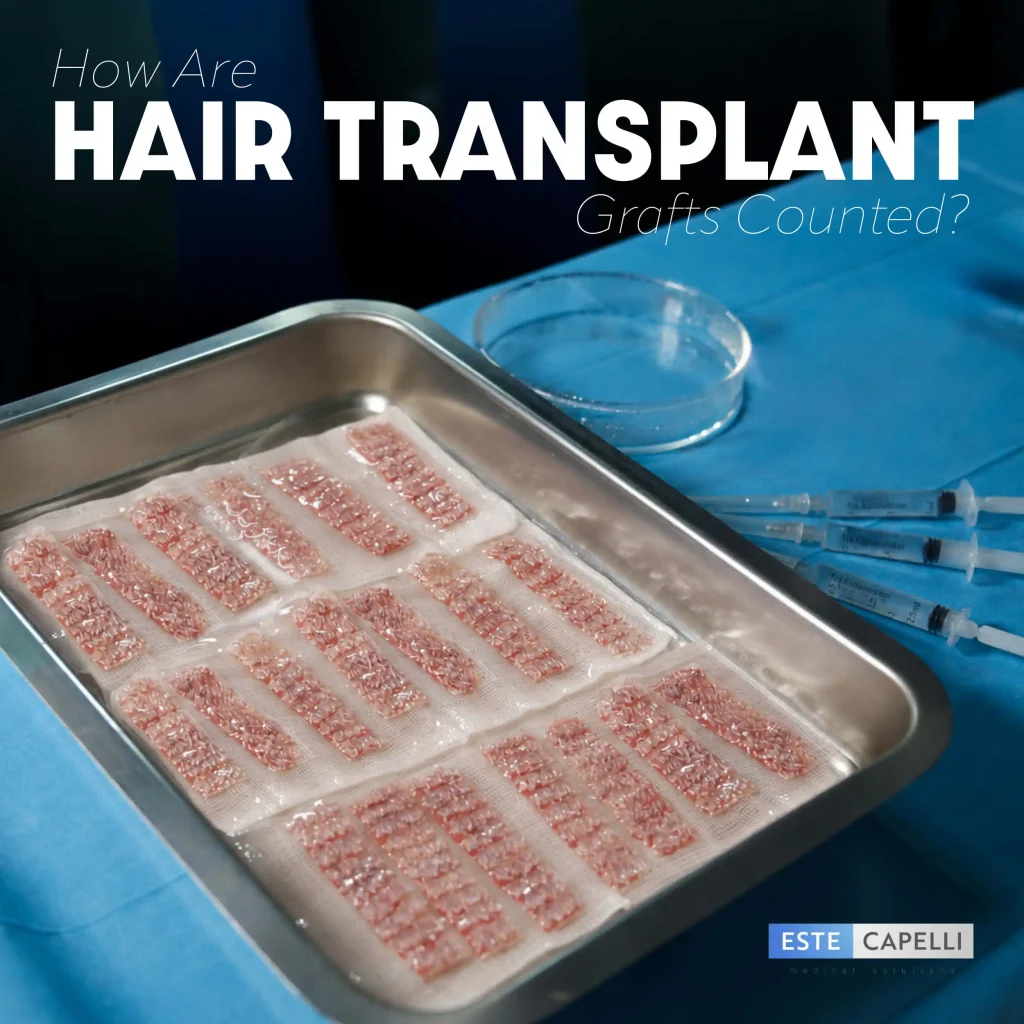
How Are Hair Transplant Grafts Counted? Grafts vs Density Explained
Quick answer: A hair transplant graft is one follicular unit, a natural cluster of 1 to 4 hairs, so the hair transplant graft count…
Read more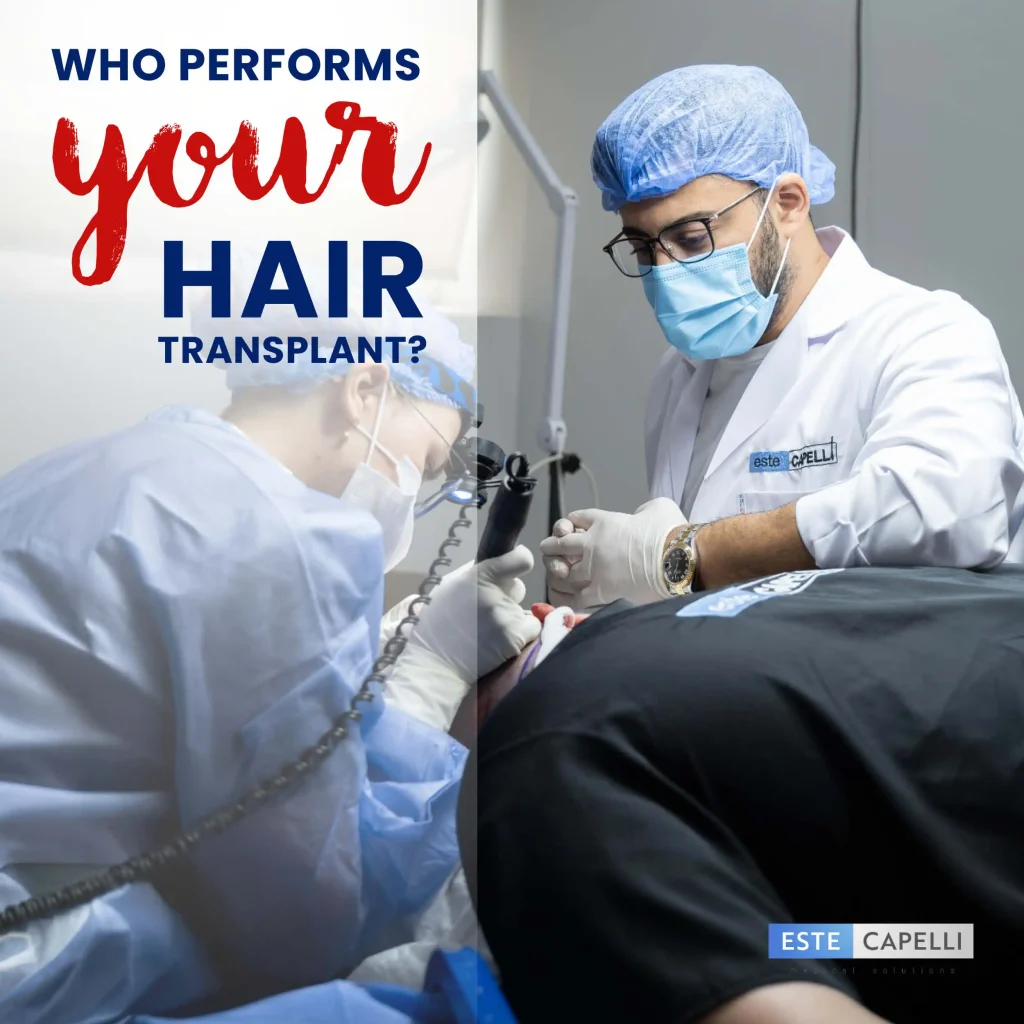
Who Performs Your Hair Transplant? Hair Transplant Surgeon vs Technician Roles Explained
Short answer: in a properly run clinic, the hair transplant surgeon is responsible for the medical decisions and the surgical steps: diagnosis, donor planning,…
Read more
Hair Transplant Turkey Package: What’s Included in 2026
A hair transplant Turkey package bundles the procedure, your hotel, airport transfers, medication and aftercare into one fixed price. That is the main reason…
Read more